
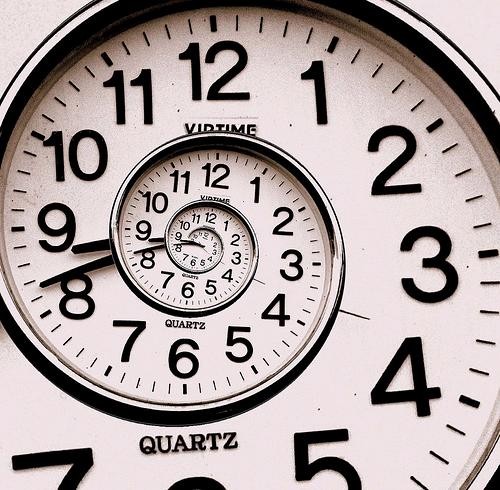
As I grow older, the concept of time moving faster becomes more evident every single day. Friends say, ang bilis ng panahon, parang kailan lang, and you catch yourself agreeing more often than not.
What used to feel distant now feels recent. Years collapse into what seems like a continuous stream of events. Birthdays come quicker, weekends disappear faster, and even long-term plans seem to arrive sooner than expected.
Why is it so?
Time, in the physical sense, remains constant. A minute is still 60 seconds, an hour is still 60 minutes. But psychology tells us that how we experience time is highly subjective. Our brains don’t measure time like clocks do—they interpret it based on attention, memory, and perception.
Table of Contents
Routine makes time go faster.
One of the strongest psychological explanations is the role of novelty.
When we encounter something new—our first job, a new environment, or a major life event—our brain becomes highly engaged. It processes more information, forms richer memories, and pays closer attention to detail. This makes time feel slower in the moment and fuller in retrospect.
On the other hand, routine reduces cognitive load.
When your days become predictable, your brain shifts into efficiency mode. You no longer need to consciously process every step of your day. As a result, fewer detailed memories are formed.
This creates what psychologists call a “memory compression” effect. When you look back, a week filled with routine feels shorter than a week filled with new experiences—not because it was shorter, but because there’s less stored information to recall.
You get preoccupied with more things.
This is my theory—but it aligns closely with attention-based models of time perception.
When we are younger, our attention is less fragmented. We can spend long stretches focused on a single activity—playing, studying, or simply doing nothing. Time feels expansive because our attention is fully immersed in the present.
As we age, our cognitive bandwidth gets divided.
We multitask. We think about work while eating, check messages while walking, and plan tomorrow while still dealing with today. Our attention is constantly split across multiple concerns—career, relationships, finances, responsibilities.
Psychologically, attention acts like a “time lens.” The more attention you give to the present moment, the longer it feels. The less attention you give—because you’re distracted or preoccupied—the faster it seems to pass.
That’s why busy days often feel short, even if they’re exhausting.
Relative time alive.
Another well-known explanation comes from proportional theory.
Our brains tend to interpret time relative to our total life experience. When you’re five years old, one year represents 20% of your life. That’s a significant chunk, making it feel long and substantial.
At 40, one year is only 2.5% of your life. It becomes a much smaller proportion of your accumulated experience.
Because of this, each passing year feels shorter compared to the total timeline stored in your memory. It’s not just a feeling—it’s a cognitive bias rooted in how we contextualize time.
The role of memory and “firsts”
Another psychological factor is the number of “firsts” we experience.
Childhood and early adulthood are filled with first-time events—first day of school, first job, first relationship, first major achievement. These moments are encoded deeply in memory because they are novel and emotionally significant.
As we grow older, the number of “firsts” decreases. Life becomes more about repetition than discovery.
Without new milestones, fewer standout memories are created. This contributes to the sense that time is accelerating because fewer events serve as anchors in our ذهن when we look back.
So what can we do about it?
If psychology tells us that time feels faster because of routine, divided attention, and fewer new experiences, then the solution is not to “slow time,” but to change how we engage with it.
Introduce novelty—travel, learn something new, take a different route, or even change small habits.
Be intentional with attention—practice being fully present in simple activities, whether it’s a conversation, a meal, or a walk.
Create memory markers—do things that are meaningful, not just repetitive. These become reference points that “stretch” your perception of time in hindsight.
Because in the end, time doesn’t actually speed up. But your experience of it can either feel rushed and blurred—or rich and expansive—depending on how your mind engages with it.
