
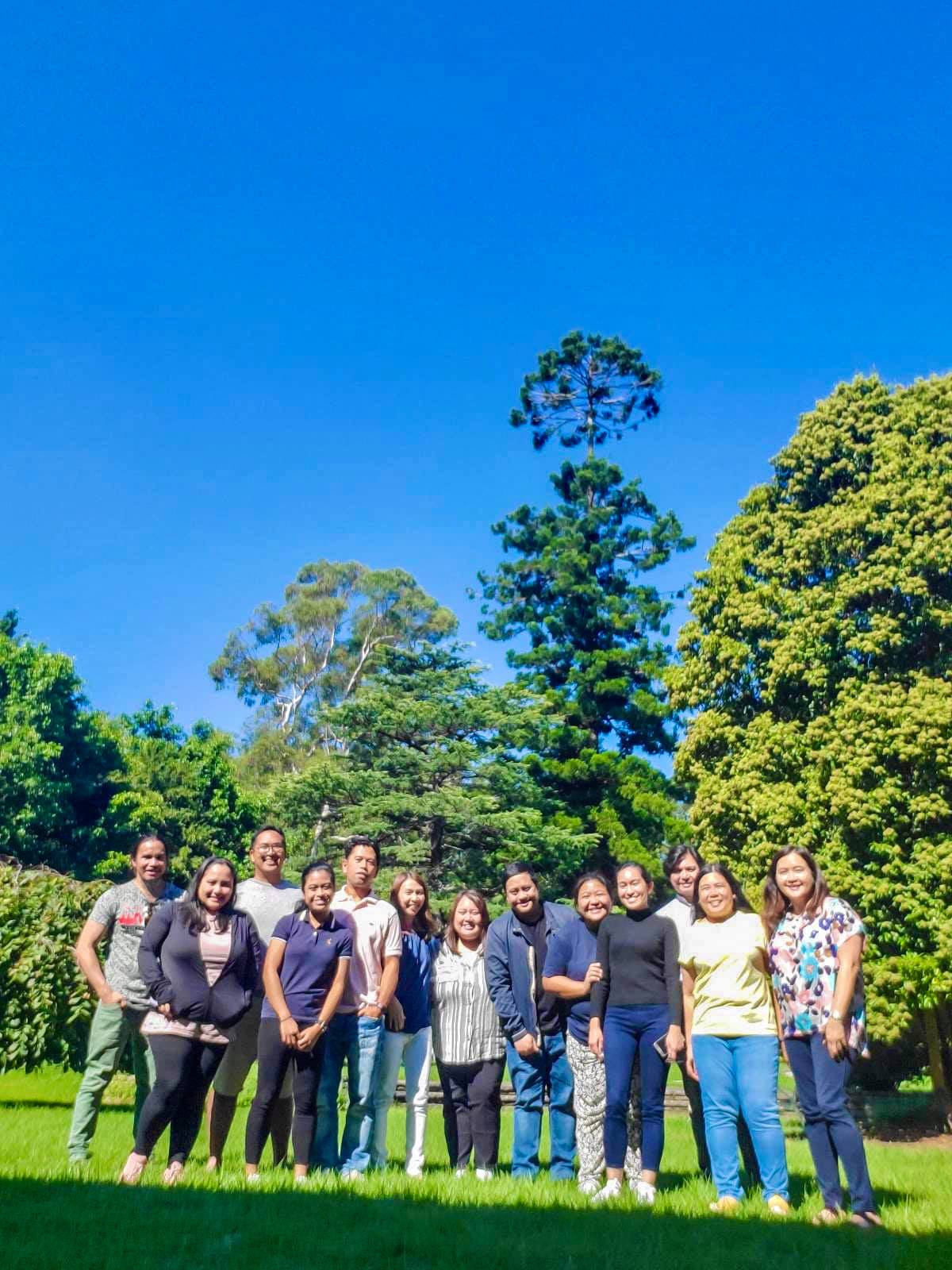


In mid-November 2020, I invited Giselle, who leads our choral group Himig Sandiwa, and her mom, Tita Angge, to the house for dinner.
The invite came after she’s missed out on a couple of party invitations at home — a fellowship way back in February when my wife was around to prepare flavoursome dishes for a handful of members, and a Halloween theme party in October, on which she was a late scratch.
Over beef mechado cooked with the assistance of my wife from a long distance, we talked about a variety of things, among which are plans for the choir group in 2021. More than eight months after the declaration of a global pandemic, we missed the Tuesday practices and performance of the whole group during the first and fourth Sundays of every month. We were all grappling with lockdowns, job security fears, and mental health issues. Such predicament could impact our faith, so spiritual nourishment to complement the YouTube masses at home is a welcome addition.
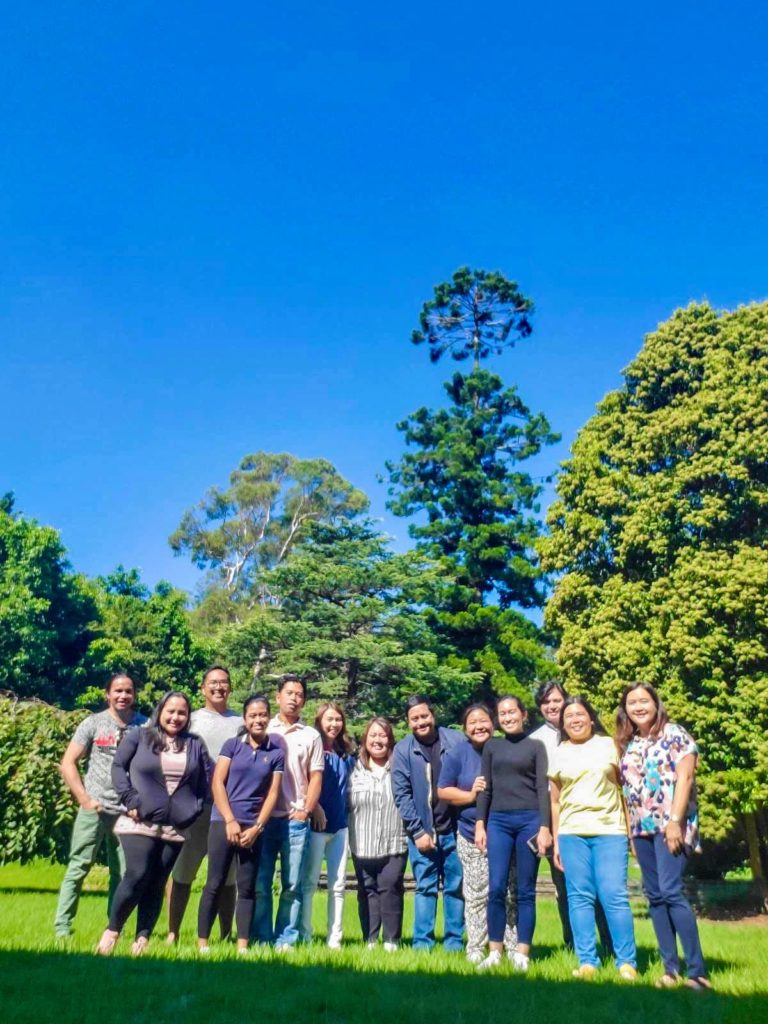
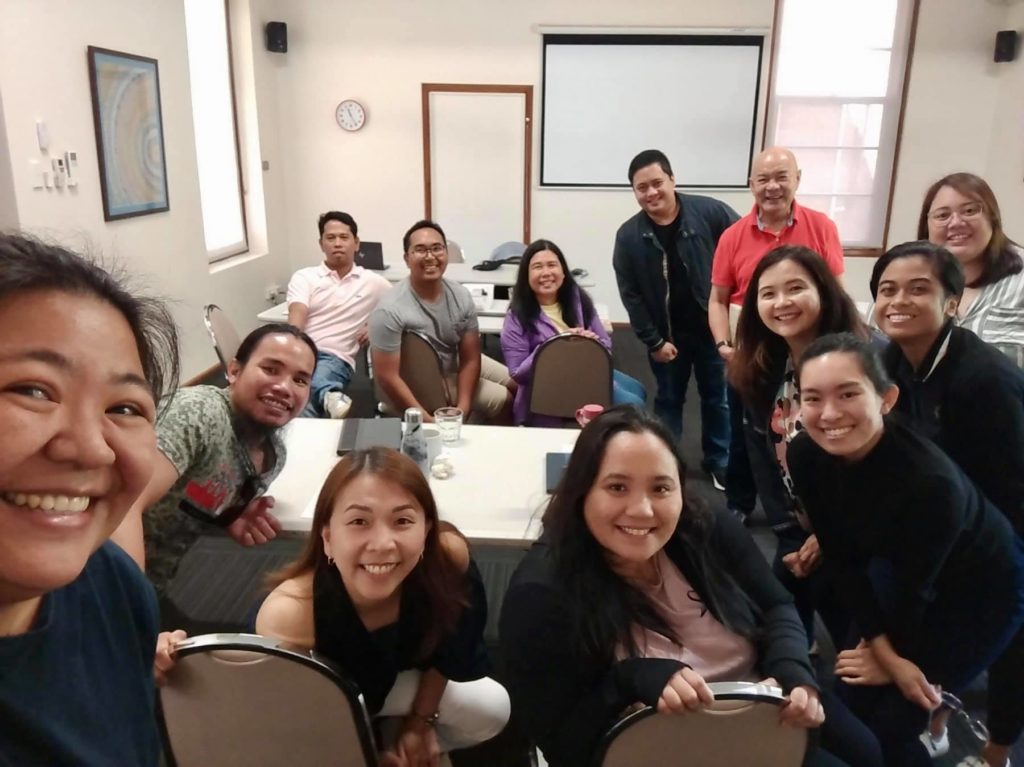
Photo credit: Caj Sosito
A few months later, this plan translated to a formal request to hold a retreat. Thankfully, the Filipino Chaplaincy-Chatswood Parish has pledged to bankroll a significant portion of the expense, and this also coincided with Fr Joey Frez’s intention to conduct the same activity across various groups in Our Lady of Dolours parish. What we needed to do is to pick a date, get a commitment from group members, and secure confirmation from Fr Joey or whoever will give talks in the retreat.
The weekend of 26-28 February was chosen as the date of the retreat. We had six weeks to prepare, which meant we had enough time to set up, from looking for a venue to planning the two-day program. The organizing committee was composed of Giselle, Diony, Joy, Caj, and me.
We found a venue at Pymble, the Jesuit-run Peter Canisius House, named after a Dutch saint whose feast day shares with my birthday. It was an ideal venue not only because it has all facilities and quiet atmosphere we need to conduct a weekend spiritual break, but it was also relatively close to home; just 15 minutes drive from home, it was also close enough for Fr Joey to take short trips to his other appointments in between our sessions.
In the past, our retreats as members of the Singles for Christ in Hong Kong were done in Cheung Chau island over the weekend and our small group of about 15 listen to talks, discuss and share experiences, and perform communal activities such as clean the kitchen, and wash dishes. A priest would join us to officiate the holy eucharist and become available for the sacrament of reconciliation. Ours this time in Sydney isn’t too different in terms of participant number and depth of topics.
The first talk Fr Joey gave was introduced with a series of questions: what is my purpose, what is my plan, and how do I follow Jesus. He used an example of the contrasting approach Mary and Martha employed to do so. Each of his talks was introduced by the soothing music of Bukas Palad, an inspiration for the group who is used to listening and performing similar types of hymns. Playing them evoked a relaxed stance and detachment from the usual distractions that occupy our minds.
I realised I am similar to Martha in the way I manage the preparation for this event. I was more hands-on but also felt the need to micro-manage things, from preparing the paper works to assigning rooms and keeping the keys, and from tracking the pace of the program to arranging for a birthday cake request. Joy told me, I didn’t have to worry about every minute detail as I’ve already done the bulk of the job. I might be looking for recognition if things go as my plan, rather than allow God to execute His plan in perfection.
The sight of Himig Sandiwa prays the rosary together was a touching moment. I am used to seeing the group practice songs and play instruments, but seeing Ryan and Mark led the rosary with their respective partners (men have the mandate as a priest, provider and protector in the family), was something new. I thought of this idea of having a rosary session every Tuesday via Zoom when our Tuesday practices were cancelled but did not put the idea forward for the group to consider.
Tita Ditas Naguit shared a workshop about the crucial role laypeople play in the church. When I was still in Hong Kong, our community at the Couples for Christ played various roles in the church community. We sang as part of the choir, the children were altar servers, I wore multiple hats: a lector, eucharistic minister and lector. Her sharing also resonated with the call for a new evangelisation, which meant laypeople who extend the reach of priests as missionaries sharing God’s Word don’t have to figuratively drag people into the church premises initiate the mission. The Good News can be shared whether they are in jails as prisoners, hospitals as patients, or workers doing their daily grind.
I managed to ask her about her experience leading the Filipino community in Chatswood through FCCP. As a founding member, she witnessed how it began with a request from a priest, how it transformed over the years, and how God worked to multiply the seeds propagated in the role of Filipinos in the parish, just like anywhere in the world.
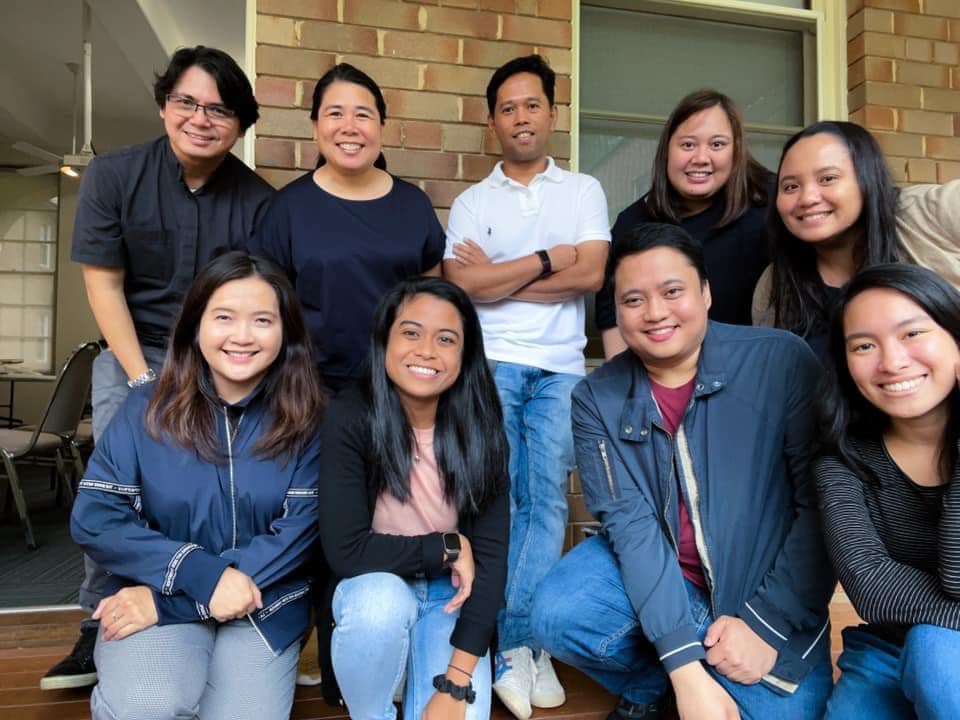
Photo credit: Mark Angelo Alarcio.
In my experience leading the singles ministry in Hong Kong (now I am also assigned the same task here in Sydney), there’s a sense of accountability and self-worth when you assign someone a role, no matter how small it is. When we conducted the Christian Life Seminar, I try to get everyone involved. From leading the prayer, operating the projector, preparing food and drinks, or sharing in the talk. That’s how I think laypeople should serve, no task is small enough to please the Lord.
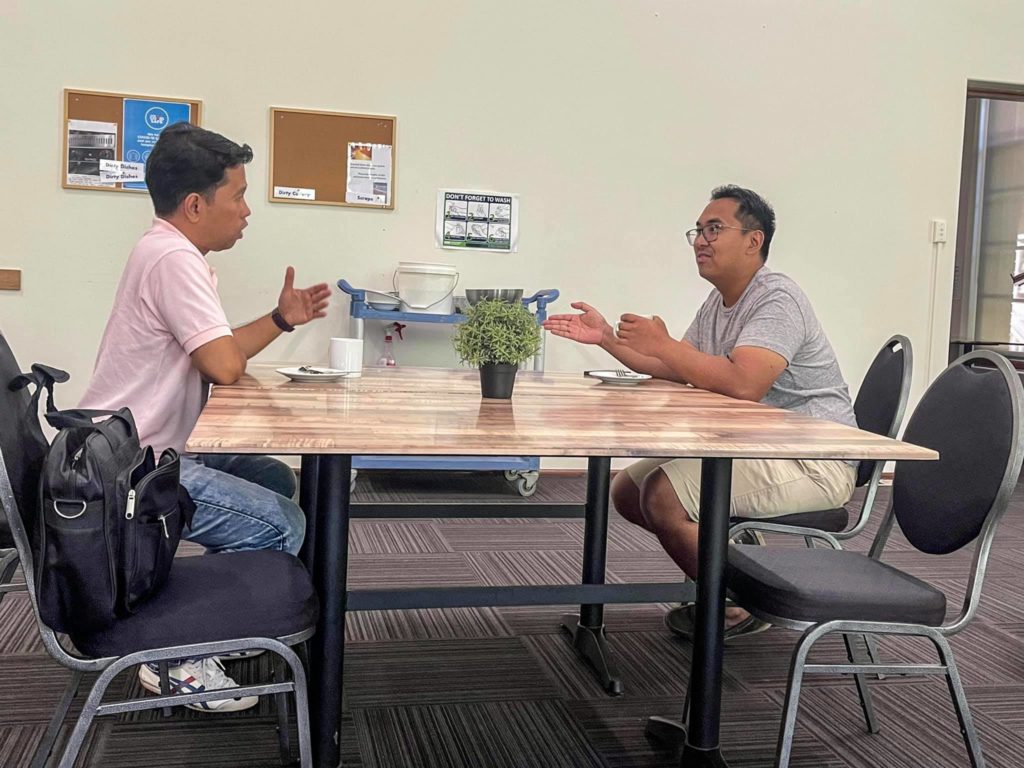
We had a series of talks, yet I felt there was no attempt to squeeze in topics to make the most of our stay at Peter Canisius House. After lunch, we had plenty of time to rest, catch up, or do a short walk near the venue. Saturday was cloudy which made it ideal for a leisurely walk without worrying about sunblock. As usual, we couldn’t resist taking snaps whether inside the meeting room, walking in the surrounding greenery, or candid shots — like my animated discussion with Ryan about his outreach trips to India.
***
It was amazing that Father Joey managed to secure a commitment from other speakers to spend their weekend with us on relatively short notice. Father David Ranson later came in and had a talk about the contextual meaning of beauty in our service as a choral group. As a new priest in our parish, Fr Ranson projects a warm smile as he gets to know each of us in the room.
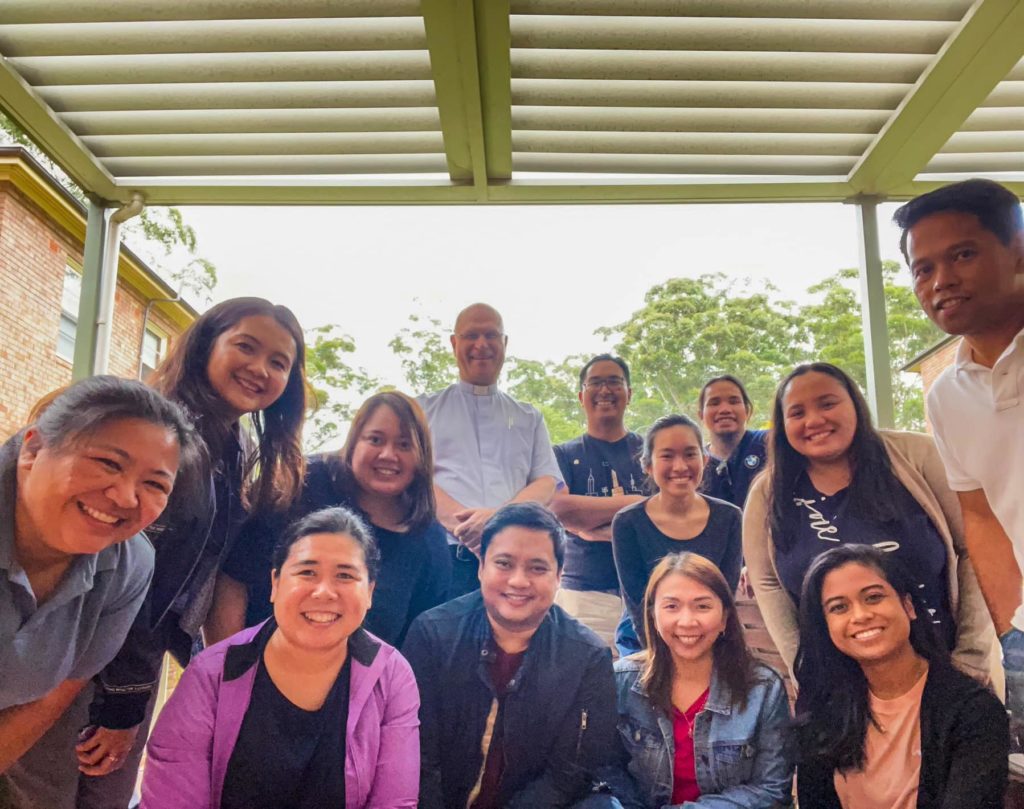
“To be awake is to be alive,” Father David quotes Henry David Thoreau, the American naturalist and poet, whose enduring wisdom on topics such as the spiritual benefits of walking, the creative benefits of keeping a diary, and contemplated on the meaning and purpose of being awake:
“The millions are awake enough for physical labour; but only one in a million is awake enough for effective intellectual exertion, only one in a hundred million to a poetic or divine life. To be awake is to be alive. I have never yet met a man who was quite awake. How could I have looked him in the face?”
We must learn to reawaken and keep ourselves awake, not by mechanical aids, but by an infinite expectation of the dawn, which does not forsake us in our soundest sleep. I know of no more encouraging fact than the unquestionable ability of man to elevate his life by conscious endeavour.”
We can be asleep when our eyes and ears are closed not necessarily dozing off but failing to appreciate the beauty and grasp the message. As Jesus performed many times, He heals the blind as a way to send a message to everyone who is in spiritual slumber and embrace our purpose and His plans for us.
Fr David recalls an experience in an art gallery where people want to own a masterpiece by going around and taking photos instead of pausing to appreciate its beauty. It reminded me of a trip to Van Gogh Alive! the show featured the works and thoughts of the famous Dutch post-impressionist painter. We were more interested in sharing what we saw through our social media accounts than immerse ourselves within it. We didn’t do anything wrong, we just chose an odd way to appreciate art.
Aesthetic beauty is sensed by eyes and ears. Even if we all agree that “beauty is deep within”, we can’t help get attracted by the strong visual influence of attractive objects like the food we share on Instagram. But Christian beauty, according to Father David, emerges in a redemptive act of Jesus’ passion and death. The Gospel of Transfiguration is an example of this as Jesus appeared in radiant glory accompanied by old testament figures Moses and Elijah witnessed by his disciples.
“Jesus was as transfigured before them; his face shining as the sun, and his garments became white as the light” (Mt 17:2), this precedes Jesus’ paschal mystery of his passion, death and resurrection; true Christian beauty manifested by Jesus’s love through suffering and death on the cross.
***
Deacon Roberto Corpuz came in on his birthday (technically the following day on a leap year) and shared a workshop on vocation. As the only married member in the audience, I have chosen my vocation, even if I was being teased to applying to be a deacon. I guess the rest is still discerning a path in life: get married, enter a religious order or choose single blessedness.
The concept of deacon as a married layperson was a new concept to me. I often associated a deacon as the last stage for a religious person before he is ordained as a priest. Deacon Roberto articulated it for us and even attempted to lie prostrate during ordination before Ryan volunteered in front of the group.
Recalling a 1939 film Goodbye Mr Chips that featured a song called Fill The World With Love, the deacon loved the lyrics that portrayed the various stages in life. The promise of youth in the morning, the prime of life of fulfilment, and later part of life reminiscing and ask these question: Was I brave and strong and true? Did I fill the world with love my whole life?
He shared his life before moving to Sydney, especially his time in Hong Kong, probably when I was also there doing similar things like interacting with fellow singles on Sundays and serving various parishes through Live Christ Share Christ to audiences such as domestic workers serving the church as choir, ushers or occupying the entire stretch of Chater Road in Central during their Sundays off.
Earlier in the talk, Deacon Roberto asked us to pick a unique number from 1 to 12. I picked #1 thinking it was prepared to share my thoughts or perform as requested if others are not so willing. It turned out to be a random giveaway of God’s Word 2021 daily Gospel. My number got picked too, but I politely declined and handed it over to someone who doesn’t have it yet; I received a copy as a gift from brother Mike and sister Agness Guillema at MFC Sydney Christmas party.
***
As part of the concluding talk, Father Joey asked our little silos what are our plans for our service, ministry and how to enrich our spiritual life and commitment as true followers of Christ. Joy and Ryan made excellent remarks, and as a former teacher, I also joined the chorus of their plan to use their profession in whatever capacity to serve the church. This additional layer of commitment is a great complement to the desire to learn more through Bible reading and learning the history of early churches.
We cannot give what we don’t have.
As planned initially, the purpose of the retreat is not only to receive spiritual nourishment. It also aims to give the group a deserved break from the chaos of everyday life. With the break, I don’t necessarily mean silence and digital detox, though Fr Joey hinted at this. It meant doing things for the fun of it, like Ryan and Cha randomly playing the guitar as Wush and company provided vocal accompaniment during our “socials” night.
Or Diony masterfully executing his bag of tricks to bring the house down with his ice breaker games that prompted us to summon our artistic and creative side. (Mark, how does a tiger sing a song in two seconds?)
I was also catching up to the 200km challenge in Strava I joined in February, so naturally, I have to wake up early to build that 8-kilometre deficit. Whether a walk at Dalrymple-Hay Nature Reserve with Joy, Rea and Mark or run with Liv to cover an entire block that shares a border with Turramurra, every recorded step counts. While my walking companions were there, my running mate backed out. But thankfully the weather was pleasant, and I successfully conquered the challenge with a 2-kilometre lunchtime walk after a 4-kilometre run right after my exploration at the nature reserve with fellow early birds.
***
I am glad this weekend activity took place. Since I arrived in Australia, I only had a confession on Day 1 so joining this retreat was a long overdue activity, Witnessing the veneration of the blessed sacrament was a spirit-filled moment. While I join the entire Filipino community in commemorating the 500 years of Christianity in the Philippines on March 16, I am also looking forward to May 8th, the 500th anniversary of the birth of Saint Peter Canisius, my adopted saint.